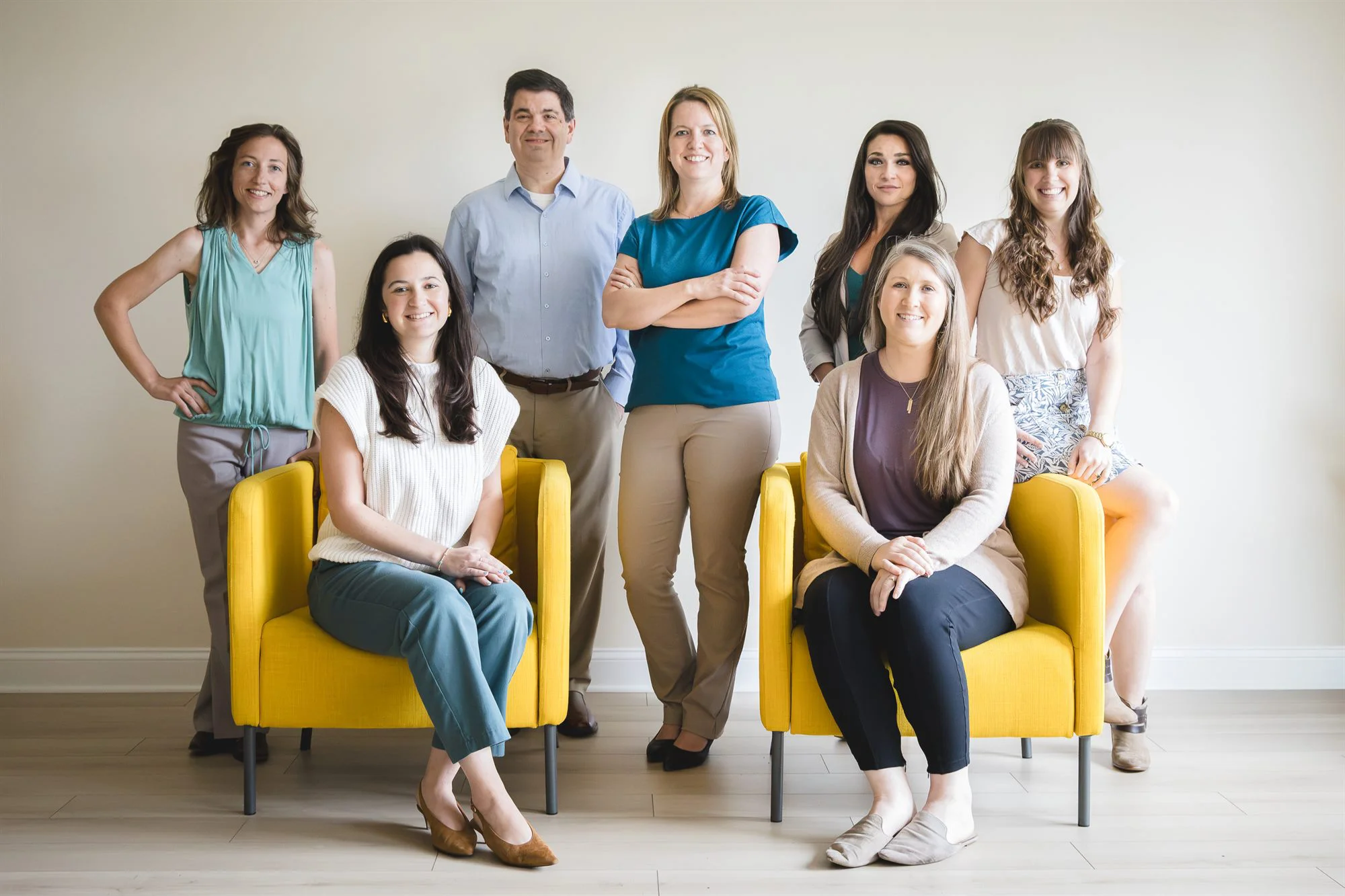
The Kuehnel Psychological Services care team at their Franklin, MA office

The heart of Kuehnel Psychological Services is our team.

Based in Franklin, MA, we provide child and adolescent psychological services for families throughout nearby Norfolk County, MetroWest, and surrounding communities. We are psychologists and clinicians who believe that the best care happens when people come together, sharing knowledge, offering support, and celebrating progress big and small.

Our work is evidence-based and neuroaffirming, but it’s also deeply personal: we take the time to know your child, your family, and your story. By blending our individual strengths, we offer care that feels comprehensive, trustworthy, and rooted in genuine connection. We look forward to getting to know you and working together to support your child’s growth.

Mission & Approach to Professional Practice

At Kuehnel Psychological Services, we work with students in preschool through college who have neurodevelopmental challenges, emotional difficulties, and/or adjustment issues. We aim to support the development of those children and adolescents by working collaboratively with their caregivers. Our approach to service delivery emphasizes the role of primary caregivers, such as parents, stepparents, and grandparents, while also carefully considering the meaningful impact of teachers, coaches, and other adults in a child’s life. We appreciate opportunities to consult with school teams and other clinical professionals, as we wholeheartedly believe it allows us to obtain the most complete understanding of a child’s functioning. Over many years of assisting families, we have discovered that the most significant and enduring treatment progress happens when children are backed by a committed team of adults working together consistently.

We approach each child and family with kindness, patience, openness, and compassion, in order to learn how we can best help. With an understanding of individual needs, we engage in three types of professional practice: prevention, assessment, and intervention. Our prevention services allow parents to monitor their child’s social, emotional, and behavioral growth closely, in order to address any typical challenges in child development before they become clinically significant concerns. For students who are demonstrating challenges that may be indicative of a neurodevelopmental or emotional disorder, we have various assessment options that can provide diagnostic clarity and inform evidence-based recommendations for intervention. We also offer bi-annual follow-up to monitor progress for those students, so that families do not have to wait years in between comprehensive evaluations for meaningful information. For children and adolescents who require more individualized intervention, we offer a range of services, though we typically do not see children under age 10 for individual therapy, and we reserve the most space for parent-focused and/or parent-assisted interventions. Ongoing research demonstrates that young children make more substantial gains when therapeutic work is conducted with parents, rather than with the child alone. Generally, we believe that in early childhood, equipping parents with evidence-based strategies is the most effective way to fuel developmental progress.

At a time when “neurodiversity affirming care” has become a topic of frequent discussion and interest, we have thoughtfully discussed our beliefs and approach to professional practice. As mental health professionals, we aim to provide excellent, neuroaffirming care; we recognize the rights and strengths of those with developmental differences, and we emphasize the importance of supports that are grounded in accommodation and understanding. With that said, there is increasing consensus in the world that shared spaces often fail to meet the needs of neurodiverse individuals, and even the most effective advocacy cannot guarantee that every experience or shared social space will have the necessary resources to provide accommodations. Over years of professional practice, we have observed that many children with neurodevelopmental differences are often left to navigate shared spaces without the tools they need. Accordingly, we believe that children and adolescents deserve access to interventions that can foster skill acquisition and decrease unhelpful symptoms, so that they feel fully equipped to handle all of life’s experiences. In providing intervention recommendations, we make it a priority to validate differences, nurture a positive self-identity, and support self-advocacy.

We wholeheartedly believe that children and adolescents can have individual differences that do not necessarily make them neurodiverse or neuroatypical. Neurotypicality is in and of itself a spectrum, and not every individual with social, emotional, behavioral, or learning challenges necessarily meets criteria for a formal disorder/diagnosis. We want prospective clients to understand that we are dedicated to following our diagnostic manual and regularly invest in professional development to stay updated on new developments in clinical diagnosis. However, it is a disservice to children to reach beyond diagnostic criteria to offer diagnoses that are not grounded in high-quality data. At times, families can feel that without a formal diagnosis, they will be unable to adequately help their child, but effective interventions target a child’s symptoms, not a label. Regardless of whether or not a diagnosis is applicable, we deliver research-informed, individualized recommendations that can make a positive difference in the lives of children, adolescents, and families.

The families we support frequently have diverse needs, yet screentime is an almost universal challenge. The research on screentime and child development is constantly expanding, and our clinical team follows it rather closely. There is an indisputable link between excessive screentime use in early childhood and the subsequent diagnosis of emotional and behavioral disorders. We recognize that preferences and opinions about screentime vary widely among families, and we also wholeheartedly understand the challenges families face in establishing safe and effective family systems for managing screentime. With that in mind, it is crucial for prospective clients to understand our position: excessive screen time is detrimental to children’s neurocognitive development, as is social media use during the preteen and teenage years. Therefore, when we have reason to believe that screentime is playing a significant role in fueling emotional, behavioral, or other developmental challenges, we offer individualized recommendations to foster better outcomes for students. We are passionate about helping parents develop effective strategies for managing screentime, and we are available to collaborate with community and school groups interested in exploring this topic further.

The Kuehnel Psychological Services office in Franklin, MA

Support That Empowers Growth

Our specialized services are designed to nurture emotional well-being, strengthen learning skills, and guide families through challenges with care and understanding. Whether your child needs support with anxiety, emotional regulation, attention, executive functioning, learning differences, ADHD, autism-related needs, or school-related concerns, we walk alongside your family with thoughtful guidance.

For families seeking deeper clarity, our comprehensive developmental and neuropsychological evaluations can help identify strengths, challenges, diagnostic considerations, and practical recommendations for home, school, and ongoing support.

Social, Emotional & Behavioral Support

Learning & Executive Functioning Support

Wellness & Wisdom

More than a collection of articles — this is a space to reflect and access trusted information and gentle guidance for caring for yourself and your family.

75 Children’s Books About Mental Health

For families looking to talk more openly about their child’s differences, this website from Child Mind Institute summarizes the best literature for children with various neurodevelopmental or mental health differences.

Read More

Insights in Practice

Follow us on Instagram for everyday tips, reflections, and resources to support children, teens, and families.

Curious what others think of Kuehnel Psychological Services?

Dr. Kuehnel translates best practices into meaningful strategies for parents and students. Her expertise and deep understanding of complex learning profiles drive the day-to-day interventions that improve overall functioning for families. With the big picture in mind, Dr. Kuehnel can break down the skills your child needs into manageable steps to support lasting change.

Educational Advocate

Dr. Kuehnel attended my daughter’s special education eligibility meeting and everyone at the IEP table remarked how helpful Dr. Kuehnel’s report was in understanding our daughter and how to support her. When I shared the report with our pediatrician, she said it was the best and most thorough one she had ever seen!

Neuropsych Client

The testing is very thorough, and the comprehensive reports Dr. Ballou provided to our family were very detailed and easy to follow. Our behavioral health team at our pediatrician’s office and our IEP teams at school have also commented many times about how professional and helpful the comprehensive reports have been. It has assisted our family in developing appropriate action plans to help our children become the best version of themselves.

Neuropsych Client

Carolyn conducted a school observation as part of my daughter’s assessment, which was so impactful! My child’s presentation is particularly nuanced and Dr. Kuehnel was able to detect and highlight her struggles that were going under the radar. Her carefully synthesized observation report, combined with her very thorough and thoughtful formal report of my child’s presentation, proved critical in helping the public school system see our daughter’s needs.

School Observation Client

The report is a work of art! So beautifully captures our son and I think will be really helpful, most importantly for our understanding of him as a learner, but also over the next year as he prepares for high school. Thank you, thank you, thank you!

Neuropsych Client

I cannot thank you enough for your presentation last evening. It was informative, engaging, and useful for the targeted audience. We had SEPAC members from three different towns represented in our small group last night, so I would definitely call it a success.

SEPAC Board Member

Thank you so much for sharing her neuropsychological report. We are beyond grateful for the time, care, and expertise that went into this evaluation. The report is incredibly comprehensive and provides a deep and thoughtful understanding of her unique learning profile. Your report not only affirms many of the strengths and challenges we have observed, but also offers new insights that will be instrumental as we move forward in planning the most effective supports for her.

Neuropsych Client

I thought you did a great job conveying the testing results combined with direct observations to help us understand what we are dealing with. We sincerely appreciate your diligence and efforts!

Neuropsych Client

I just wanted to tell you that we had the meeting to determine eligibility and the Team agreed that he should get services! We will be putting together the IEP in the next couple of days. We can’t tell you how relieved we are! Your excellent, thorough report had a lot to do with it. Thank you so much!!!

Neuropsych Client